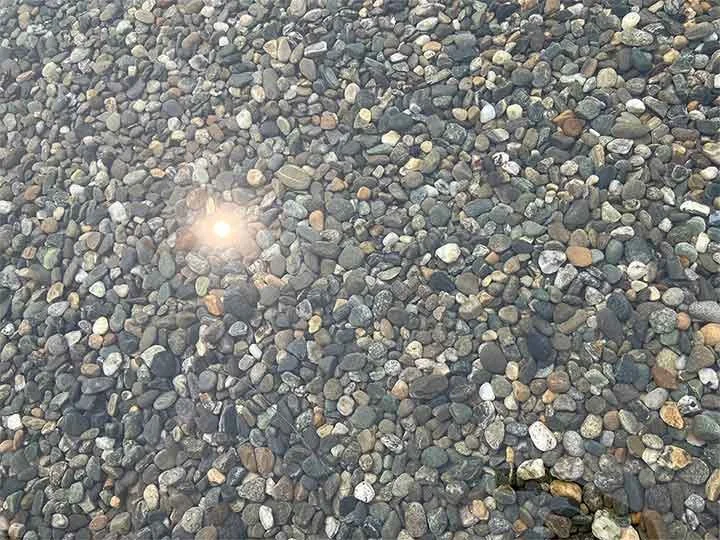
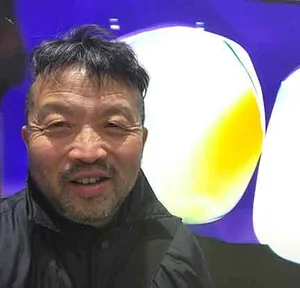
A work of art doesn’t belong in a gallery — it belongs in the quiet corners of everyday life.
We rely too heavily on exhibitions, galleries, and museums to tell us what art is. But does art really need spotlights and white walls to be seen?
I’m more and more convinced that a work’s true life goes far beyond those spaces. It can settle into an unnoticed corner, breathing and glowing alongside everyday life.
What is “real”? Does art really need something to depend on?
In my practice, I’ve always tried to explore the most authentic part of art. Even though I constantly question whether “realness” truly exists, I do believe everyone carries their own version of reality — and art grows out of that. My work is fueled by personal conviction and by the situations I live through, but it doesn’t rely on directly narrating those experiences. Instead, each piece is a quiet, ongoing conversation between the world and me.
Art is not about making beautiful objects
I’ve always kept a distance from the idea that art is about creating “beautiful things.” To me, art already exists in the cracks and folds of daily life — life itself is a form of art. What I do is simply notice it, rearrange it, and let it reveal itself. The more I observe the world, the more I wonder: Why do the things that are always around us escape our attention? My work is a reminder — a way to bring the overlooked back into view.
The art world pursues spectacle. I choose the small and quiet.
Today’s art world is obsessed with scale, visual impact, and sensational effects.
I don’t reject large works, but this trend feels like it’s pushing us away from the essence of art. I’m drawn instead to the small, hidden, ordinary things — the ones that quietly hold the core of our existence. I want my work to live within life, not to be confined by exhibitions. Galleries and museums shouldn’t be the final destination of a piece. For me (Le Xi), the best place for a work is somewhere it can simply rest — quietly, in a corner.
My work Balance and Line: Are we controlling, or being controlled?
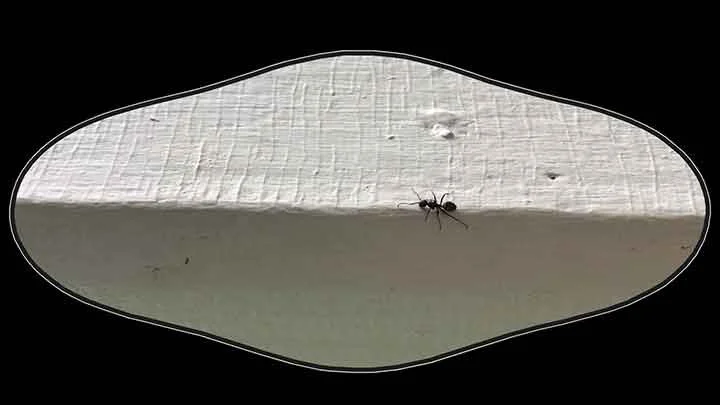
Take my piece Balance and Line as an example: It magnifies our human desire to control “balance” and “straight lines” by confusing scale and visual perception. During the non-intervention shooting process, I tried hard to keep the lines perfectly stable — that act itself became an “unnatural” interruption of nature.
In this piece, I tried to turn everyday objects into pure lines, letting them form new relationships through tactile memory. And I want to ask:
What is real control? When we think we’re in charge, are we actually being guided by something deeper?
Through extreme simplification and removing narrative, I’m exploring the thin border between material and sensation — and the deep link between feeling and physical posture.
Where art belongs: not “on display,” but in existence
I don’t want my work to be worshipped in a display case.
I want it to seep into life: A beam of light, a texture, a quiet moment…
The work exists in a subtle but persistent way, waiting for someone to encounter it.
Maybe the ideal place for art isn’t a formal space at all, but those overlooked corners where it can exist quietly, naturally, and freely.
Art doesn’t always need to be “looked at.” Sometimes, it just needs to be encountered.
What do you think?
I’d love to hear your thoughts:
What everyday moments do you think hold a kind of hidden art?
Or:
If there were no galleries, how would you want to encounter a work of art?